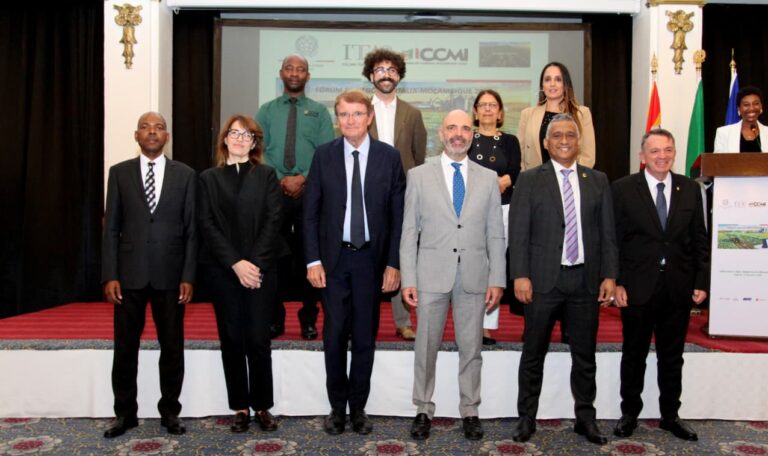
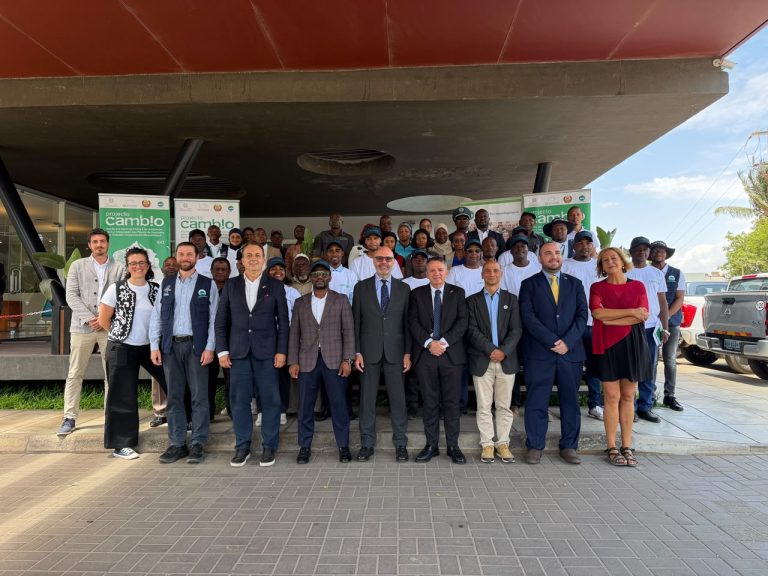
On 7–8 July 2026, Mozambique’s National Emergency Operations Centre (CENOE) in Maputo and the Provincial Emergency Operations Centre (COE) for Sofala Province, based in Beira, took part in the country’s first national Command Post Exercise (CPX) organised under the Ready2Act project, funded by the Italian Cooperation.
Working together in a national-scale simulation, the two operations centres tested the country’s ability to translate meteorological and hydrological forecasts into coordinated civil protection decisions. The exercise brought together all institutions responsible for forecasting and monitoring, alongside the main agencies involved in disaster risk management and disaster risk reduction.
Mozambique is among the countries most exposed to climate-related hazards, particularly tropical cyclones, floods and droughts. In this context, the ability to rapidly share, interpret and translate information into coordinated operational decisions is essential to protecting communities and reducing the impacts of disasters.
“This exercise marks one of the final steps in establishing the operations centres. We are testing information flows and interoperability between the national centre in Maputo and the provincial centre in Sofala. Our objective is not simply to operate a technological platform, but to ensure that information reaches decision-makers in time to protect lives and reduce disaster impacts,” said Ana Cristina Manuel, Director of the National Emergency Operations Centre.
The exercise was jointly coordinated by the Italian Civil Protection Department and Mozambique’s National Institute for Disaster Risk Management and Reduction (INGD), with technical support from CIMA Research Foundation and logistical support from We World.
The exercise was carried out under the Ready2Act project, funded by the Italian Ministry of Foreign Affairs and International Cooperation (MAECI) through the Italian Agency for Development Cooperation (AICS).
The exercise simulated a tropical cyclone comparable in intensity to Cyclone Idai, which severely affected Mozambique in 2019. The scenario was also informed by the heavy rainfall events that impacted the country during the first months of 2026.
The simulation covered the entire early warning chain, from the production of meteorological and hydrological forecasts to the dissemination of warnings, the definition of alert levels, and the coordination of preparedness and response measures.
Participating institutions operated under realistic conditions, testing operational procedures, technological tools, information-sharing mechanisms and decision-making processes.
The final debrief highlighted a strong level of coordination between the national and provincial levels. A key role was played by the Conselho Técnico de Gestão e Redução do Risco de Desastres, the technical coordination body responsible for reviewing forecasts, defining alert levels and agreeing on the main preparedness and response measures.
The exercise confirmed the strategic value of the Sistema Integrado de Fluxo de Informação de Aviso Prévio de Cheias e Ciclones, the national platform used to share bulletins, warnings and operational updates among the institutions involved.
Key priorities identified for further strengthening the system include more systematic use of the platform, the adoption of common operational procedures, enhanced information-sharing tools and closer coordination among institutions.
“This exercise represents an important milestone in the path we are building together with our institutional partners, particularly INGD, INAM and DNGRH. Its greatest value lies not only in testing procedures and operational tools, but also in strengthening coordination among the institutions involved. Through closer collaboration, we can further consolidate Mozambique’s national early warning system and enhance anticipatory action. At a time when the impacts of climate change are becoming increasingly evident, investing in prevention, preparedness and coordination means strengthening the country’s ability to protect its communities and respond effectively and in a timely manner to disaster risks,” said Luca Ferraris, President of CIMA Research Foundation.
“This exercise demonstrates the added value of the partnership between Italy and Mozambique in disaster risk reduction. Through the joint commitment of the Italian Cooperation, the Italian Civil Protection Department, CIMA Research Foundation and Mozambican institutions, we are helping strengthen an increasingly integrated early warning system capable of turning scientific information into timely decisions that protect people. As climate change continues to intensify disaster risks, investing in prevention and emergency preparedness is also an investment in the country’s safety and sustainable development,” said Gabriele Annis, Ambassador of Italy to Mozambique.
The Command Post Exercise involved a total of 80 participants. The lessons learned will guide the next phase of the Ready2Act project, supporting the further development of an increasingly integrated national early warning system capable of enabling anticipatory action before extreme events produce their most severe impacts.